Future Trends in Augmented Reality Apps for Mobile
AR Beyond Gaming
Augmented Reality (AR) has evolved from a niche gaming feature into a practical tool for daily life in 2026. Mobile hardware now includes dedicated sensors for precise spatial mapping. This allows digital objects to interact realistically with the physical environment. Turnexedic sees a future where mobile recharge and service management are handled through intuitive AR interfaces. The boundaries between digital data and physical space continue to blur.
Revolutionizing the Shopping Experience
Retail apps now allow customers to try on clothing and accessories virtually with perfect accuracy. AR mirrors use the phone's camera to overlay fabric textures onto the user's body in real time. Furniture stores provide tools to place full-scale 3D models of products in your living room. These apps calculate lighting and shadows to show exactly how an item will look in your home. This reduces the need for returns and increases consumer confidence in online purchases.
Enhanced Navigation and Wayfinding
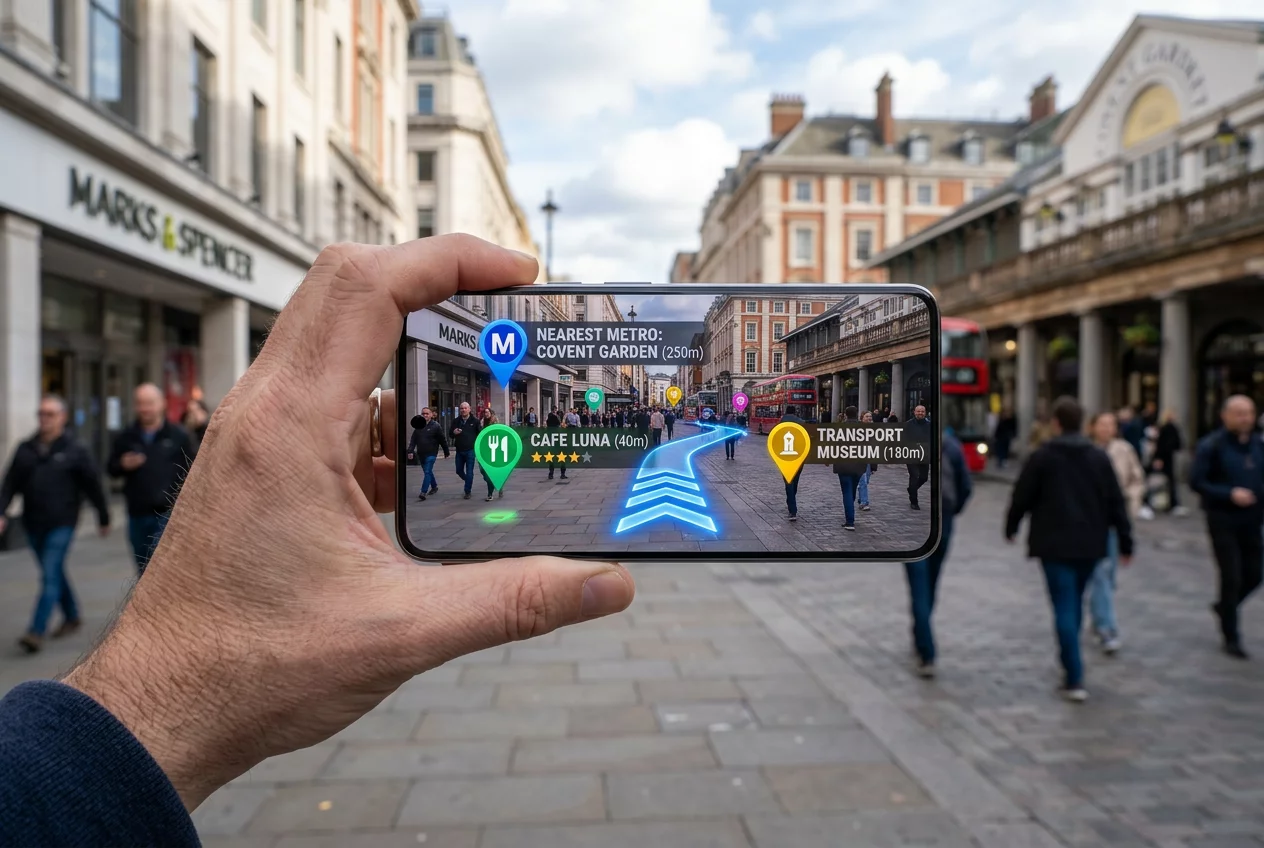
Walking directions have become much more intuitive through AR overlays. Arrows and markers appear directly on the sidewalk when viewed through the phone's screen. Points of interest like restaurants and transit hubs display real-time information as you pass them. This technology is particularly useful in complex indoor environments like airports or shopping malls. Turnexedic users can find local service points by simply scanning their surroundings with their phones.
AR in Education and Training
Complex subjects become easier to understand when visualized in three dimensions. Students can explore a detailed model of the human heart or a historical site from their desks. Interactive AR textbooks bring static images to life with animations and expert commentary. Vocational training apps guide workers through complicated repair tasks by highlighting parts in the real world. This hands-on approach to digital learning improves retention and engagement across all age groups.
Social Media and Creative Expression
Social platforms have moved beyond simple face filters to immersive environmental effects. Users create persistent digital art that others can discover in specific physical locations. Virtual avatars can participate in real-world events alongside their physical owners. These creative tools allow for a new level of self-expression in the digital age. The social experience becomes a collaborative layer on top of our shared reality.
The Shift to Wearable AR Displays
While smartphones remain the primary hub, AR glasses are becoming more common. These wearables offload the visual processing to the phone while providing a hands-free experience. Information appears naturally in the user's line of sight without the need to hold a device. This transition represents the next step in mobile computing. Turnexedic stays at the forefront of this trend by ensuring all services are compatible with the next generation of mobile hardware.